“Medical doctor preparing for B1 observership visa interview”
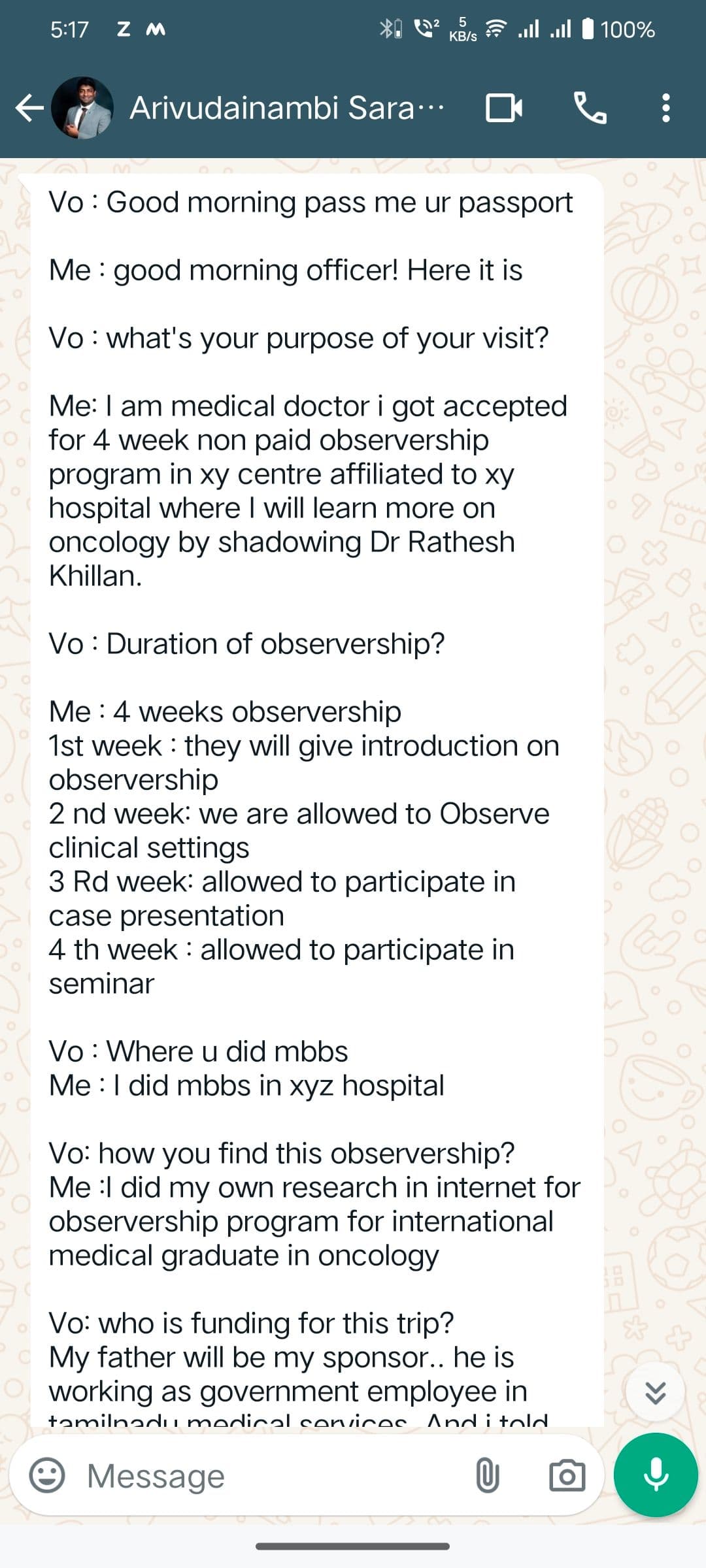
“Medical doctor accepted for oncology observership program — shares detailed interview Q&A transcript.”
B1 visa approved (medical observership)
Arivudainambi S.
B1 visaWhatsApp
FOR B-1 OBSERVERSHIP APPLICANTS
You'll walk into your interview ready to explain the difference between observing and working. Using my STAMP Method, we'll prepare answers that prove your observership is genuine, so the officer sees a learner, not an unauthorized worker.
Message us, we respond within 6 hours with your prep plan

Shachi Mall, Visa Interview Coach
75+
medical professionals coached
4.9
Google Reviews
Approval artifacts
“Medical doctor preparing for B1 observership visa interview”
“Medical doctor accepted for oncology observership program — shares detailed interview Q&A transcript.”
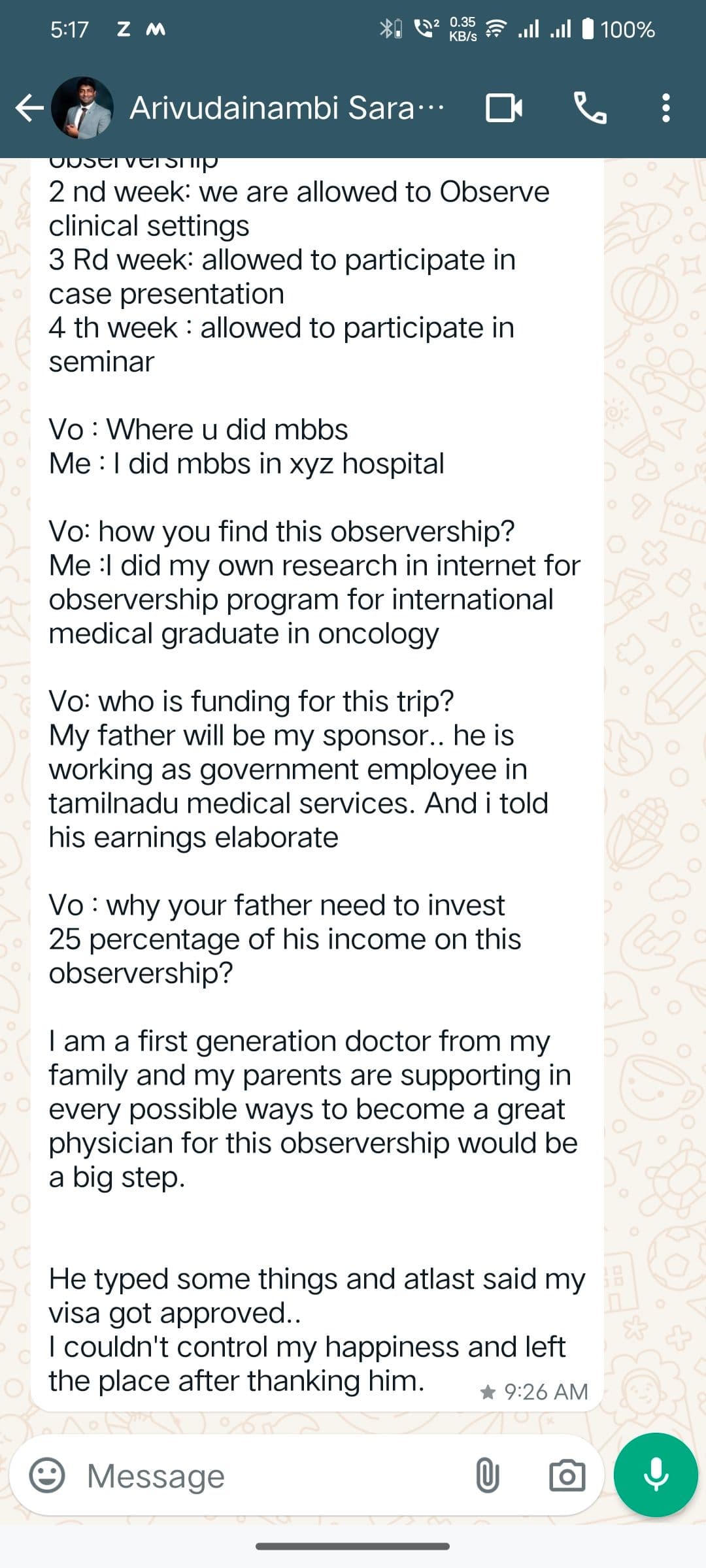
“My visa got approved. I couldn't control my happiness and left the place after thanking him.”
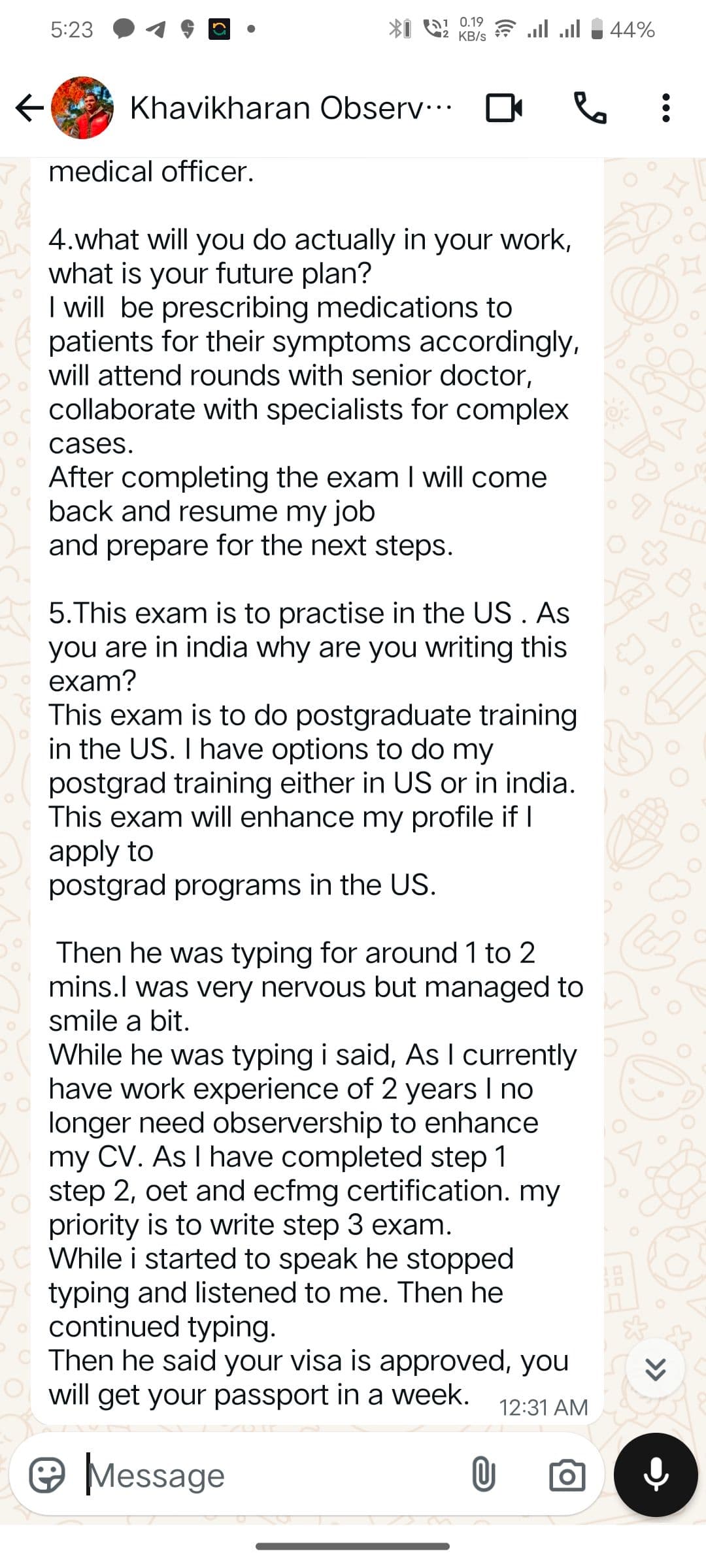
“Medical doctor needing B1 visa for USMLE Step 3 exam”
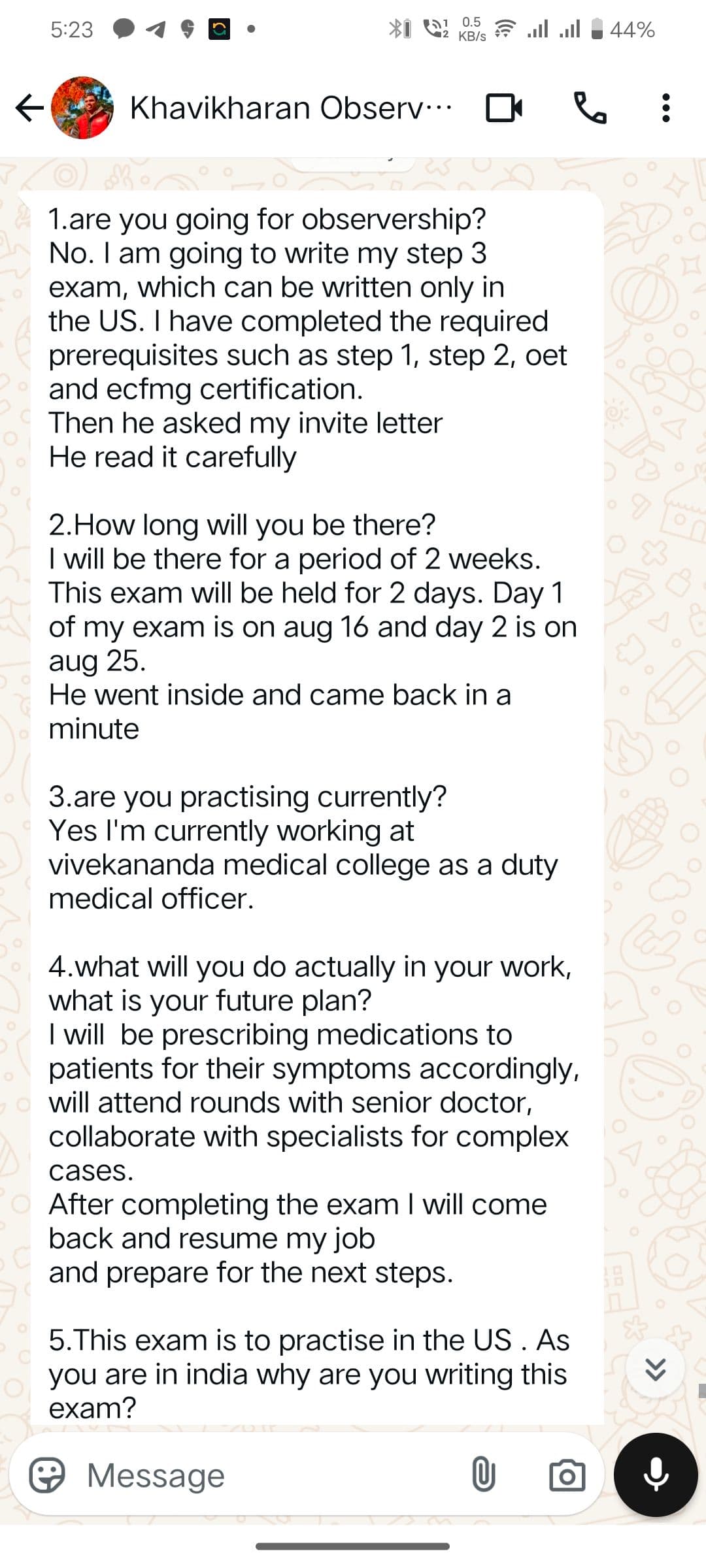
“Detailed B1 interview experience for USMLE Step 3 exam — visa approved after thorough Q&A.”
“Was very nervous during the interview”
“Was very nervous but managed to smile — visa approved, passport in a week.”
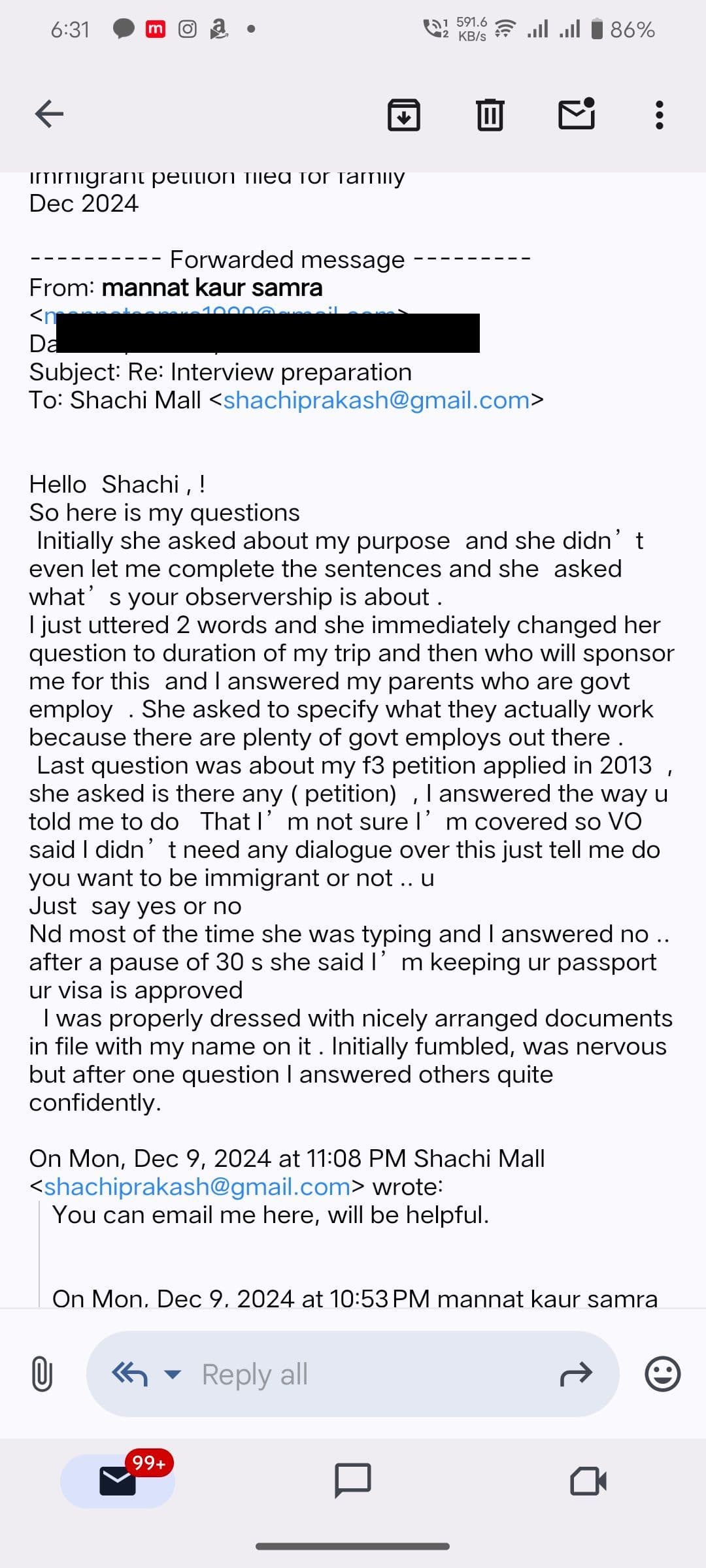
“Had an F3 family immigration petition from 2013 that complicated the observership application”
“After a pause of 30 seconds she said I'm keeping your passport — your visa is approved.”
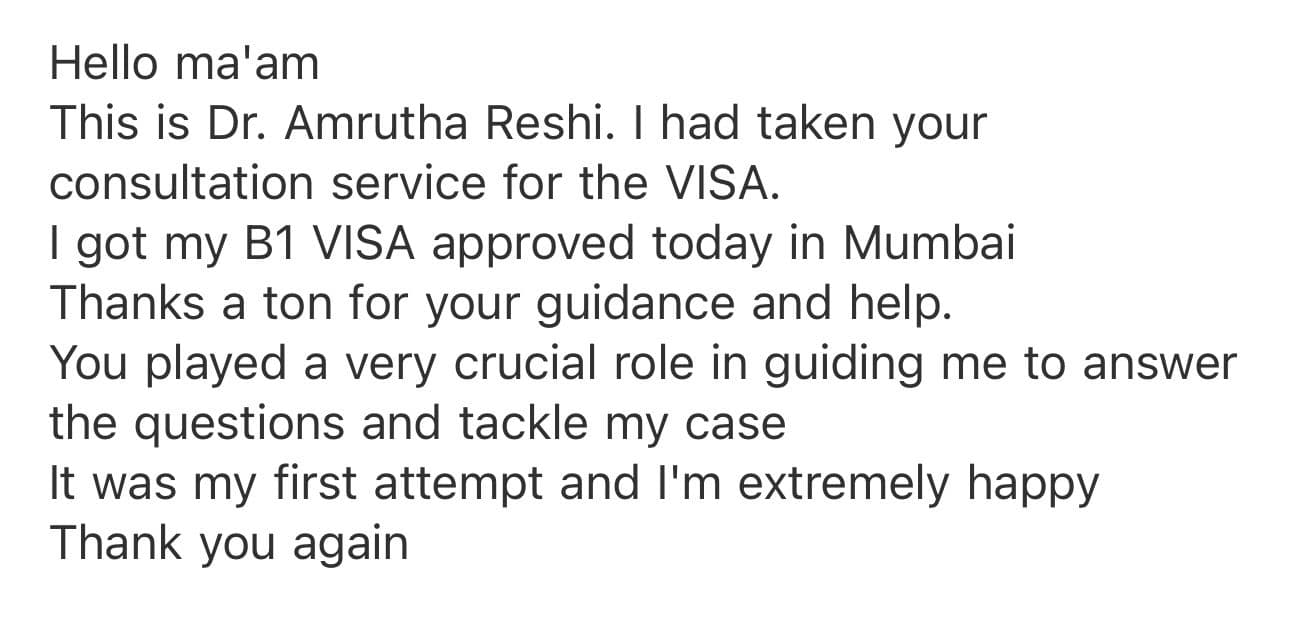
“First-time B1 visa applicant needing guidance on answering questions”
“It was my first attempt and I'm extremely happy. You played a very crucial role in guiding me to answer the questions and tackle my case.”
“Medical doctor preparing for B1 observership visa interview”
“Medical doctor accepted for oncology observership program — shares detailed interview Q&A transcript.”
“My visa got approved. I couldn't control my happiness and left the place after thanking him.”
“Medical doctor needing B1 visa for USMLE Step 3 exam”
“Detailed B1 interview experience for USMLE Step 3 exam — visa approved after thorough Q&A.”
“Was very nervous during the interview”
“Was very nervous but managed to smile — visa approved, passport in a week.”
“Had an F3 family immigration petition from 2013 that complicated the observership application”
“After a pause of 30 seconds she said I'm keeping your passport — your visa is approved.”
“First-time B1 visa applicant needing guidance on answering questions”
“It was my first attempt and I'm extremely happy. You played a very crucial role in guiding me to answer the questions and tackle my case.”
A note from Shachi
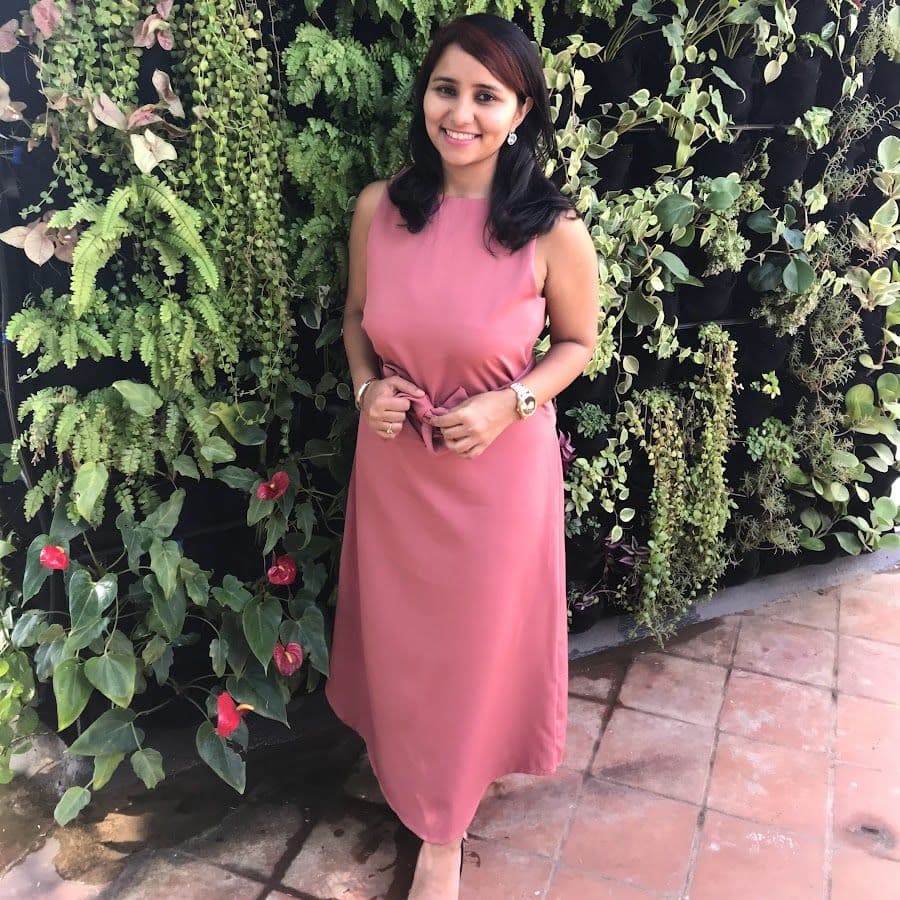
Medical observerships on B1 are one of the trickiest visa categories I handle.
The line between "observing" and "working" is blurry, and consulate officers know it. They've seen too many cases where an "observership" was really an unpaid clinical rotation. So when a doctor walks up with a hospital letter, they're already skeptical. And if that letter mentions "clinical duties" or "patient care," you're done before you start.
I built my STAMP Method around the five things every officer evaluates: your Story, your Ties, your Answers, your Money, and your Papers. For observership applicants, the key is proving you're going to observe, not practice, and that you have a career in India worth returning to.
If you've been accepted for an observership and want a bulletproof case, let's talk.
— Shachi
Sound familiar?
"It's an observership, not a job, why would they refuse?"
Officers often can't tell the difference between observing and working. You need to make the distinction crystal clear.
"My hospital sent an invitation letter, isn't that enough?"
Hospital letters often use vague language. "Clinical rotation" or "hands-on experience" can trigger a refusal.
"It's unpaid, doesn't that prove I'm not working?"
Unpaid doesn't automatically mean it's not work. Officers focus on what you'll actually DO, not what you're paid.
"I'm a practicing doctor in India, why would I overstay?"
Officers have seen doctors not return. Your medical career in India is a strong tie, but you need to present it properly.
"I'm not sure if B1 is even the right visa for this"
Some observerships require J1. If you're on the wrong visa category, the officer will catch it.
Common pitfalls
Any language suggesting hands-on medical work turns your observership into unauthorized employment.
If you say you'll "learn procedures" or "assist in surgeries," the officer hears "work."
"I want to learn American techniques" without explaining how you'll use them back home signals immigration intent.
Some programs require J1 sponsorship. Wrong visa = refusal, no matter how good your story.
Unpaid observerships mean you're self-funding. Officers want proof you can sustain yourself without working.
My approach
What's the observership about? We build a clear narrative that distinguishes observing from practicing, in the officer's language, not medical jargon.
What brings you back? Your medical practice in India is your strongest tie. We articulate it so the officer sees a doctor with a career to return to.
Can you explain your program in 15 seconds? We structure every answer, what you'll observe, why this hospital, how it benefits your Indian practice, practiced in mock interviews.
Can you afford an unpaid stay? We make sure the officer understands your financial plan clearly, no questions about needing to work.
Hospital letter, DS-160, financial proof, medical credentials, all cross-checked. We flag risky language in the hospital letter before your interview.
Ready to prepare properly?
See pricingCompare options
Swipe to compare →
| Feature | ChatGPT Self-Prep | Hospital / DIY | The STAMP Method |
|---|---|---|---|
| STORY - What will you do? | Generic observership description | "Just show the hospital letter" | Clear distinction between observing and practicing, in officer's language |
| TIES - What brings you back? | Not addressed | "You're a doctor, obviously you'll return" | Medical practice, patients, hospital affiliation in India articulated clearly |
| ANSWERS - Can you say it in 15s? | Long medical explanations | "Explain your program" | 15-second answers practiced in mock interviews |
| MONEY - Can you afford the stay? | "Show bank statements" | Not their concern | Financial plan covering the full unpaid duration |
| PAPERS - Hospital letter review | Can't review your documents | Letter provided as-is | Hospital letter screened for risky language, corrections suggested before interview |
Your investment
Once you choose, you'll receive a form to submit your documents. Our team reaches out for onboarding within one day.
Core
A tight, focused prep track for a clear, straightforward case
What’s included
Unlimited
For complex cases or completely hands-off preparation
What’s included
“I’m truly grateful for the exceptional service provided by Shachi and her team.”— Dr. Astha Kumari, B-1/B-2 and J-1
Fit check
This is for you if…
Not for you if…
Not sure if this applies to your situation?We’ve coached every kind of profile you can think of — edge cases, prior refusals, unusual situations. Just ask.
Message us on WhatsAppCommon questions
Ideally 4-6 weeks before your interview. That gives enough time for document review, answer building, and multiple mock interviews. If you're late, don't worry. We can compress prep into a 3-day crash course.
No one can guarantee approval. The final decision rests with the consular officer. What we guarantee: you walk into your interview fully prepared, with clear answers, strong documentation, and real confidence. We've coached 2,500+ applicants one-on-one, and we are always transparent that no one can promise a specific outcome.
You'll experience a realistic simulation of a U.S. visa interview. I play the role of the consular officer using real questions specific to your visa type and profile. After the mock, you receive the recording so you can review your performance and refine your answers before the real thing.
Almost certainly. Over the years, I've worked with applicants across every visa category and situation — prior refusals, complex employment histories, complicated finances, applications from high-scrutiny consulates, dependent visas, and more. If you're unsure whether your situation is something I can help with, just message us on WhatsApp. I'm happy to discuss before you commit to anything.
We accept UPI, bank transfer, Razorpay (for INR payments), and Stripe (for USD payments). All prices are listed in both USD and INR. Payment is collected after an initial consultation to ensure the service is right for you.